 Many of the tall ornamental grasses in my gardens have been looking a little tattered and floppy for some time now, but I have been waiting for signs of new growth to show in the center before cutting them back. As you can see on this variegated miscanthus sinensis, the new shoots are coming up which is a good indicator that the plant will withstand a sever cut back, look tidy all winter and be ready to bounce back in the spring. Finally!
 This bright grass in the front SJC garden is Japanese Forest Grass (hakonechloa 'Aureola') and I love it in the spring, fall and winter months when it gets mostly shade in this spot and turns a bright chartreuse color. The texture is beautiful and it brightens the garden of greens and purples wonderfully. However...
 ...for a few months in the summer it gets full sun here and turns pale and scraggly looking. I'm inclined to dig it up and move it to full shade year round, but it just goes so well in this bed. We'll see.
 Look at the tall, sturdy stems on this 'Ahoy Matey' dahlia. No staking needed here. Look for characteristics in the description that indicate strong stems when buying tubers, such as "sturdy" or "good cut flowers" and there is a good chance you won't need to do much staking. I also tend to keep to the mid-size blooms since the sheer weight of the flower can cause the stem to bend. I'm pretty laid back when it comes to staking plants and would rather just invest in plants that don't need the extra support to make a good show in the garden.
 Planting "en masse" isn't just for garden beds. This old wooden container that sits by my front walkway in SJC is usually filled with annuals. When the spring annuals were spent, only the dirt remained, I'm embarrassed to say, all summer. I was walking by the other day and on the spur of the moment decided to do something about it. With a few minutes I had broken off about a dozen young aeonium off shoots and filled in the container. No tools were needed and it has been over a month and they are doing quite well. I will probebly rotate the container 180 degrees every once in a while so they grow evenly since the light is to the left. Now why didn't I do this earlier?
 Purple Fountain Grass (Pennisetum setaceumis) one of the most appropriately named plants that I can think of, with a true "fountain" shape. But it really isn't purple, is it? More like a burgundy. Hmmm.... wonder why it wasn't called Burgundy Fountain Grass? Anyway, it is at it's glory this time of year and truly adds a fall feeling to the garden. It is starting to show up on some invasive plant lists, but I have never had much of a problem with it spreading in my gardens (unlike it's cousin, the green variety), so I will continue to grow it and recommend it for people in our area.
 I was in a discussion the other day with some gardeners and the question came up; what is the biggest pest you have in the garden? Gophers, aphids, rose slugs? I have to admit I can deal with all those problems. My biggest pest? Our seven month old German Shepard, Tilly. Luckily she is not much of a digger, except maybe to hide a bone from our other dog. But if there is anything full and lush, like these ferns or tall wispy grasses, she sees it as an invitation to jump right in it and stomp it down to make a temporary resting place where she can keep an eye on me just in case I may suddenly have the urge to play with her. See that enthusiastic, energetic look she has? She is like that from the first thing in the morning until she collapses at night. If she could talk she would be saying "Wanna play? Wanna play? Wanna play?" Where is our other dog? Hiding from Tilly, no doubt.
 Just to illustrate what a mild, cool winter we have had, the foxgloves (digitalis purpurea), that stop blooming as soon as the weather heats up, have not gone out of bloom since I planted them last spring. I guess that's one advantage to this lost summer.

 There is nothing I don't love about artichokes. I love to eat them, I love their foliage and I love their amazing blooms. They add a lot of interest to the garden and I grow them mixed in the perennial beds throughout the gardens. The even make great cut flowers in all stages of their development. Not a lot of plants in the garden can deliver on that many levels.
 What's blooming brightly in the Moonlight Garden just in time to capture the moonbeams from the magnification Harvest Moon?
 Hibiscus, Shasta daisies, daylilies and roses, just to show a few.
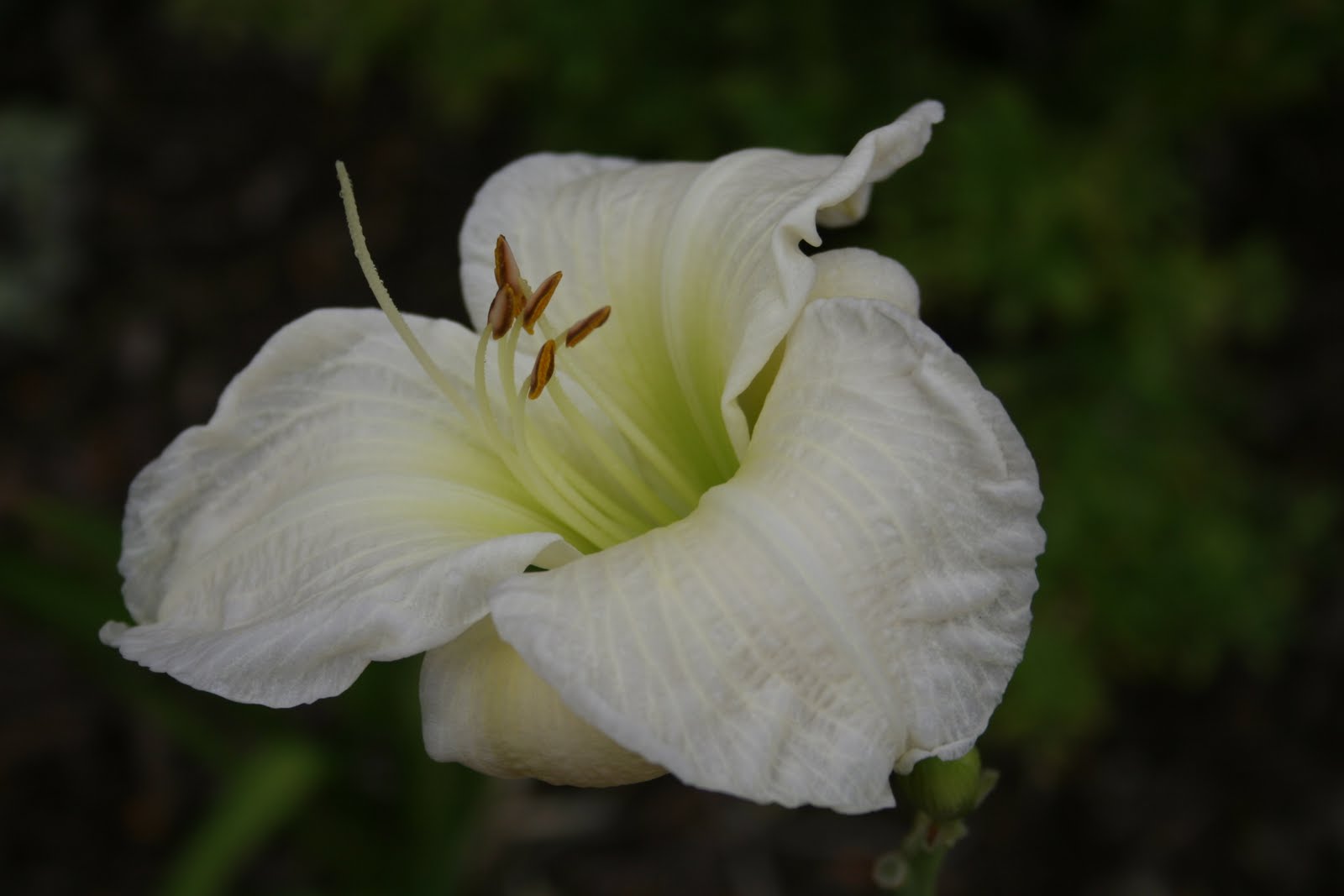 The first days of fall are being welcomed with a flush of flowers throughout all the gardens.
 The warm days ahead that are somewhat typical of our fall weather will be much welcomed by the plants that were waiting for a summer that never happened along the coast in Southern California.


