I've been focusing on adding more plants that attract butterflies. Luckily there was a Master Gardener class focusing on just that which I attended a couple months ago that introduced me to some new plants that will do the trick that I don't grow - yet.
There was an abundance of cleome at the nurseries this summer and I bought a number of them. They add nice summer color and the butterflies love them.
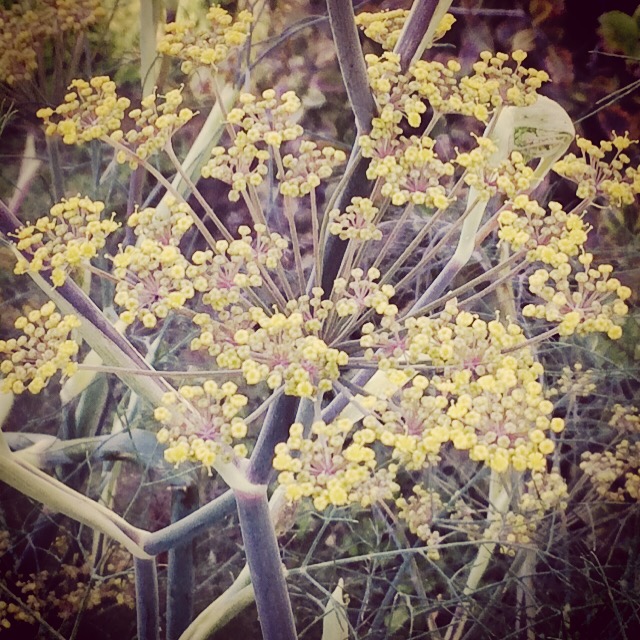
I have fennel that has self seeded throughout the gardens.
I have never grown gomphrena before, but after planting it I have a new appreciation for it. It went totally wilted when the new sprinkler weren't working, but bounced right back bigger than ever.
Of course there are the standard butterfly attractions like milkweed and passion flowers. It all must be working because there are more butterflies around than ever this year in the garden - much to my delight! Of course along with butterflies comes caterpillars and some damage to the garden while they eat their way to cocoons, so it is important to eliminate sprays, even organic ones, if you want to make them comfortable sharing your garden.
I've been crazy busy these past few weeks, but I wanted to take a minute to share a post about my SJC garden on the lovely blog of Alex Anderson - Love, Peace and Gardening. Alex writes about gardens and gardening and was directed to me when she visited the Hortense Miller Garden open house (although I am a docent there I could not make the open house this year). I was happy to share my garden with her on a misty morning and we had a lovely time walking, talking and discovering we had a lot in common, and not just about gardening. She also is passionate about Integrative Health as am I! Please pop over to her blog and see her observations as well as an interview with me!
 |
| Veronica and Cleome |
In a definite case of do-as-I-say-not-as-I-do, I have been busy planting this week. If I had seen someone at the nursery with as many plants as I had on my carts, I would have labeled them a novice. Nobody plants in the middle of summer. But I have a good excuse, or a couple of them. I really want to attract more butterflies to the gardens and since there are so many of them fluttering around looking for their favorite flowers, I figured now is a good time to add some of them to the garden before I forget.
 |
| Rose of Sharon |
I also have an upcoming event taking place in my gardens. We entertain a lot, but not usually in the summer or out in the gardens. It just so happens that all our parties seem to take place in the winter when the gardens are rather quiet and people gravitate to the inside of the house. Plus there is such a great selection at the nurseries this time of year! I am usually not visiting them much in the summer, but they are just packed with all kinds of great plants that I don't always see other times of the year.
 |
| Cleome |
So although I'm happy to be able to utilize the gardens for a wonderful summer party, this is just not a good year for taking advantage of the flower beds. I have lost a number of perennials, either due to them just being at the end of their life cycle (not all perennials live forever) or because we have had an issue with the new low volume sprinkler heads not putting out enough water to keep anything blooming, or in some cases, alive. Of course the ongoing drought is not helping either. So I have been trying to choose wisely and water efficiently to give these new lovelies a good start, even if it is the middle of summer.
There are some plants that have really come into their own with the reduced watering cycles. I don't know if is because they are just finally mature after about seven years, whether they look good because some of the other plants typically that steal the show are suffering from the drought, or if they just truly thrive getting less water. (There is a fourth option and that is that my garden helper has been relegated to some new projects in Laguna and has not got near them with his pruners recently!)

One of these plants that I rarely think about planting is good old
lantana. These are out in the curbside garden strip. I would not
typically plant large yellow or orange flowering shrubs in any of my gardens, but the wall in the background is the same gold color as the house and I had to work with that. I have planted white lantana in the Moonlight Garden more times than I can remember and it never takes off at all. I find this common among plants, some colors are actually a more robust plant than other colored flower bloom colors of the exact same plant. Or maybe these guys are just situated perfectly. Lantana foliage is poisonous to animals and so the rabbits that are so profuse out here leave them alone. Another plus is that butterflies love them!

I honestly don't see this garden very often. When I drive out of the driveway I turn immediately left on the street and this garden is to the right, and to go out and walk by it I have to go through the front gates and leave my buddies behind (they are a bit too much off the leash to run around in the street) and nobody is happy about that.
There are butterflies everywhere and I have to give credit to the aptly named butterfly bush or buddleia. I have a few of them around the gardens but there is one that is always host to at least one butterfly whenever you look at it, this lovely purple one. Unfortunately it is situated in a bed that faces west and the plant shows its best side to the neighbors horse stalls and we get a look at the rangy back side of the plant, but I'll put up with that because the butterflies love it! It is fragrant and about five feet tall. I do cut the flowers and they are lovely, long lasting additions to bouquets. did I mention it is drought tolerant? I can't think of any reason not to grow this lovely bush that comes in so many different colors, although I have found that the purple ones do the best.
For the past six years I have been planting native milkweed to attract Monarch butterflies. We are in the migration path for their annual trek from Mexico to California and because of the over population of our area their natural food source, the milkweed plant, is disappearing at alarming rates, having a negative impact on these lovely and amazing creatures.
For many years I never saw any sign of them and so I moved the milkweed around the yard and even planted them in different spots. It did take a few years to see any signs of butterflies at all after the yard had pretty much been cultivated with pesticides and chemicals for years by the previous owners, but finally life started to return.
Last year I wasn't in the garden much due to a knee injury, but one day when I was out walking around I noticed some strange, bare sticks protruding out of the ground. It took me a while to realize it was what was left of the milkweed plants that I had planted the previous fall! I was excited that there was hope that the Monarchs had found the food source I had left out for them and devoured it, although any sign of them was long gone.

Last weekend I was out digging up iris tubers (I know, I'm way off sync) and a pretty orange and black butterfly flitted by me. I always assume any orange and black butterfly I see is a Gulf Fritillar because we have lots of them and they love the passion flower vines which I grow. But I watched it head over to the patch of milkweed as if it was directing my attention there and then it was off. I climbed through the flower bed over to the milkweed and there they were, about a dozen Monarch caterpillars of all sizes, munching away on the plants! We have been watching them all week, growing in size, then disappearing, crawling off (I hope) to form a chrysalis on a nearby leaf or twig. Today when I went out the five plants were all but stripped of all foliage and there were still tiny caterpillars just emerged still looking for food. There should be another "crop of butterflies in a couple months so maybe I should get some more milkweed in the ground before then! There are actually three short-lived (two to six weeks) generations of butterflies that hatch in one area before a "super" generation that make the migration hatch. That generation lives six to eight months to make the migration to warmer climates in the fall. Well, I'm glad they finally found my little patch of food I planted for them and I figure if they can migrate thousands of miles to find the exact same mating place through generations, they'll be able to find my little milkweed patch every year too!
This morning I found lots of things wrong in the gardens to take pictures of that will make good subjects for future posts, but today I'm just going to focus on one thing that is doing really well. My bronze fennel is lovely! I don't like the taste of fennel and don't ever harvest it. I don't really know why I planted it years ago back here when I put a vegetable garden in before I gave up and turned this area back over to the rabbits that rule the domain. Obviously the varmints feel the same way I do about fennel and so it lives on untouched, year after year. It is now about six feet tall and blooms profusely all summer with flowers that attract songbirds, butterflies and beneficial insects. The bronze foliage has reverted back to mostly green this time of year but it is light and feathery and pretty. I guess I really do like fennel after all - just not in my salad!
 |
| Asclepia curassavica |
 |
|
I have always thought of milkweed as the orange kind that I grow, like in the top photograph, but the other day I was out in the corner of the garden where I had planted some more milkweed in hopes of attracting more butterflies, when I noticed this other plant in the bottom picture. It sure looked like milkweed foliage, but I had never seen the dainty little pink and white flowers like those before on my milkweed plants. I am pretty sure it is one that my friend Jeff brought me when he read that I was having a problem attracting Monarch butterflies with my other patch of milkweed. I am not sure of the cultivar so I will not even try to identify it, but we'll keep an eye on it to see if it does a better job of bringing in the Monarchs than the orange and yellow ones have in the past. I do get a lot of butterflies now (it has taken a few years because at first there were none attracted to this property) but the Monarchs have never made a stop even though it seems like we are in their migration path and we could get at least a few.
 After being away for a couple weeks it is nice to come home to summer weather! The first order of business in the garden is to give all the large, established plants a long, slow soak to assure they are deeply watered enough to hang in there through the warm temperatures of late summer and early fall. A dripping hose for a long period around the bases will do a lot to bring relief to the palm trees and screening hedges until the rains replenish the deep soil moisture in the ground. Even the drought tolerant plants will welcome a good long drink around this time of year. And that is about all I have the energy for today!
 There are places in my gardens that only a gardener could love. Kinda of like a "face that only a mother could love". This is one of them. To the undiscerning eye it may look like a mess of unorganized, unplanned hodgepodge of plants, but to me in is luscious. I love the abandoned freedom of the micanthus sinensis grass in the back of the bed. There are 'Tamara" roses arching into the picture, beautiful iris in bloom. A bit of lavender, abutilon, verbena bonariensis and brachyscome thrown in. There are sprawling pink carpet roses and even an Asian lily. All this lies in the dappled shade in the late afternoon. This garden moves in the breeze, is filled with bees and butterflies and smells heavenly. A perfect spot to sit in the late spring and admire a garden that inspires me!
 One of the most frustrating things I found when I first started to plant my garden was that so many of the gardening books and magazines I relied on for inspiration were based on the east coast and many of the plants that were used are not available in our area. One of those plants was Lady's Mantle (alchemilla mollis) and how I longed to find it because of its tall, lime green flowers that seemed to form a haze that set off other plants perfectly. I finally did find it at Dana Point Nursery and planted it in my Laguna garden where it lived for a few years. It does best in light shade and does require regular water so it needs to be placed where its cultural needs are met. But the thing that I think is most charming about this perennial is that the leaves hold little drops of water for hours and hours, making it a little watering hole for bugs and butterflies. I found it again this year at the Dana Point Nursery and put in a few in my garden by the front door in SJC where it gets a bit of pampering.
 I did not have much luck with attracting Monarch butterflies to the garden with the native milkweeds I planted last year. However they are adding a pretty autumn combination of colors to the flower beds that they are blooming in this month.
 One lovely morning last week while walking down the driveway in San Juan I spotted this lovely gulf fritillary (I formerly identified it as a monarch and I was incorrect) butterfly drying its wings after emerging from the cocoon attached to the underside of a felt plant. I have a bad habit of walking with my head down, staring at the ground. But if my eyes were looking up I surely would have missed this rare moment.
 This is one of the most difficult spots I have in my San Juan Capistrano garden. It is along a north facing garage wall and it get hours of full sun during the hottest days of summer, then full shade during the cool days of winter when the sun sinks low on the horizon. A few plants seem to be thriving there, but the Lady Banks Rose that is climbing up the pillar on the left did not have a single blossom last year and if it doesn't bloom this year it is going to be moved. There is also a passion flower vine in the back that does not bloom either, but I will probably leave it for the butterflies. The lavender verbena does okay and the heliotrope doesn't seem to ming the fluctuations in light and then everything else is primarily foliage plants that I don't care it they bloom or not. These types of places are always a challenge to plant with perennials. Seasonal annuals may be the answer.
 I have one little stalk of Butterfly Weed (asclepias tuberosa) although I suspect it will spread by next year which will delight me because the butterflies love this plant! Which just proves the old saying, one gardener's weed is another gardener's treasure!
 My gardens in San Juan Capistrano are all fairly new so there is still a lot of filling in to do as far as plant growth goes. This one little area that was planted last fall in the 'Flying Rabbit Island' flower bed is doing well and finally showing its potential.In the background is one of my favorite plants for adding an airy feeling to the garden, verbena bonariensis (I've seen it commonly called Peruvian verbena). In front of that is the very fragrant tagetes lemmonii (sometimes called French Marigold Bush or Copper Canyon Daisies). Some people like the smell, others aren't crazy about it, me being one of the latter. In the very front is white achillea (yarrow) which is a favorite among the butterflies. All of these plants are drought tolerant.
 One of the best plants for attracting butterflies to the garden is the passion vine (passiflora). It is the favorite food of the caterpillars of the gulf fritillary butterfly which is common to the southerner half of the United States. You must be willing to put up with some damage to the leaves while the caterpillars feast on them, but you will be rewarded with lots of lovely orange butterflies all summer. There are many different species and colors of this vine and some of them can get very aggressive if not kept in check. I had a red one that actually scared me it grew so fast. I was afraid if I walked through the tunnel it had made over some arbors I had that I may never come out again! I ended up taking it out to allow other plants in the area to live.This particular specie is 'Lavender Lady".